lessons from 20 countries.
The World Food Programme - Italy, Rwanda, Uganda, Mozambique - 2015
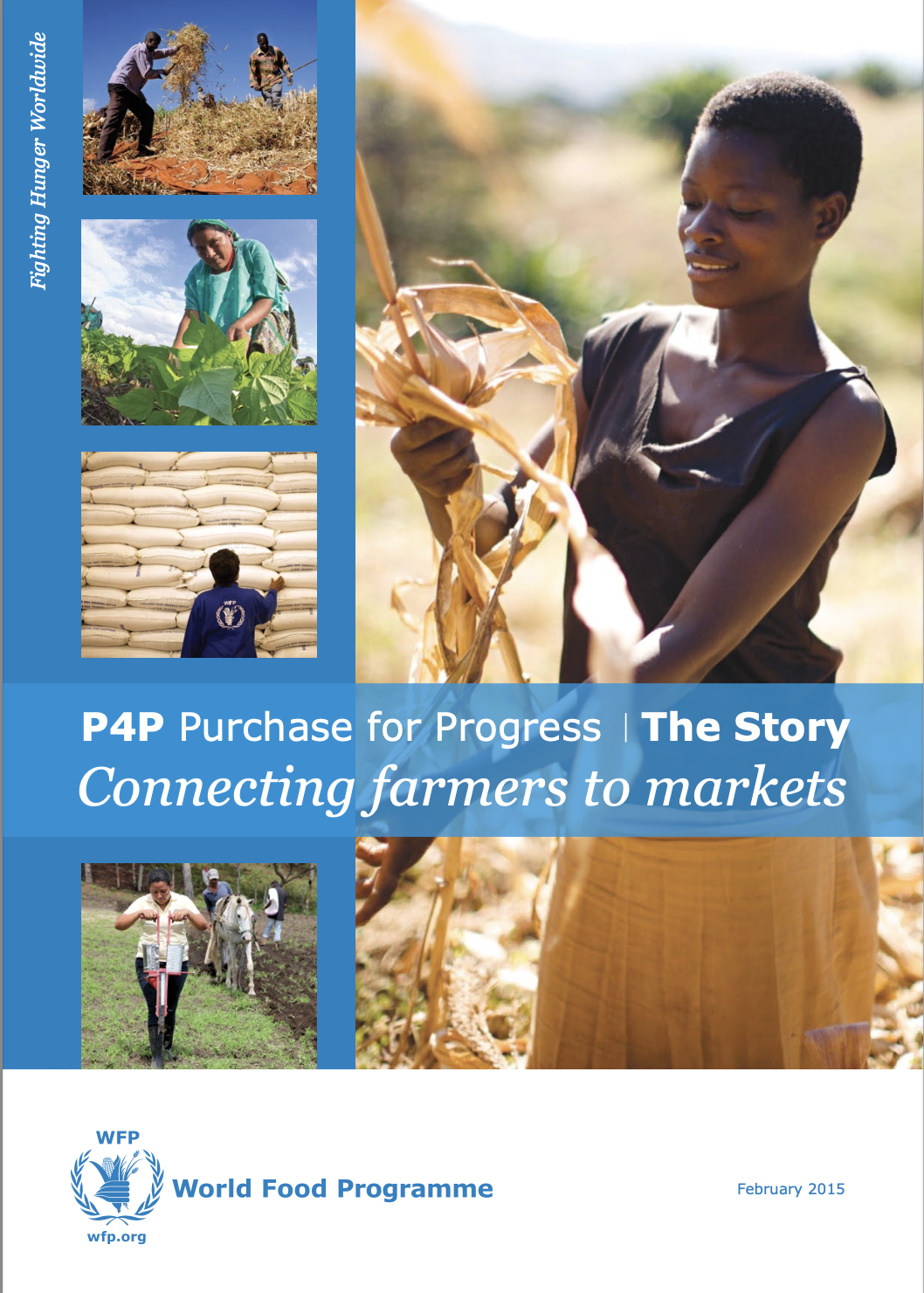
My first post-graduate experience was with a 20-country, 8-year pilot project called Purchase for Progress (P4P). Joining the team toward the end of the pilot, I supported capture and dissemination technical information about how best to link smallholder farmers to formal markets.
I researched, wrote and edited a set of 20 internal country case studies pulling together information from field visits, reports, and interviews to concisely pull out lessons learned and implications for global agricultural programming.
This set of case studies formed the basis for an overarching narrative on the 8-year Purchase for Progress pilot in a publication we called “The P4P Story”. I drafted, copy edited, and oversaw design of this publication, and developed a communications campaign to launch it, including by developing press releases, media messaging, and web materials.
Excerpt
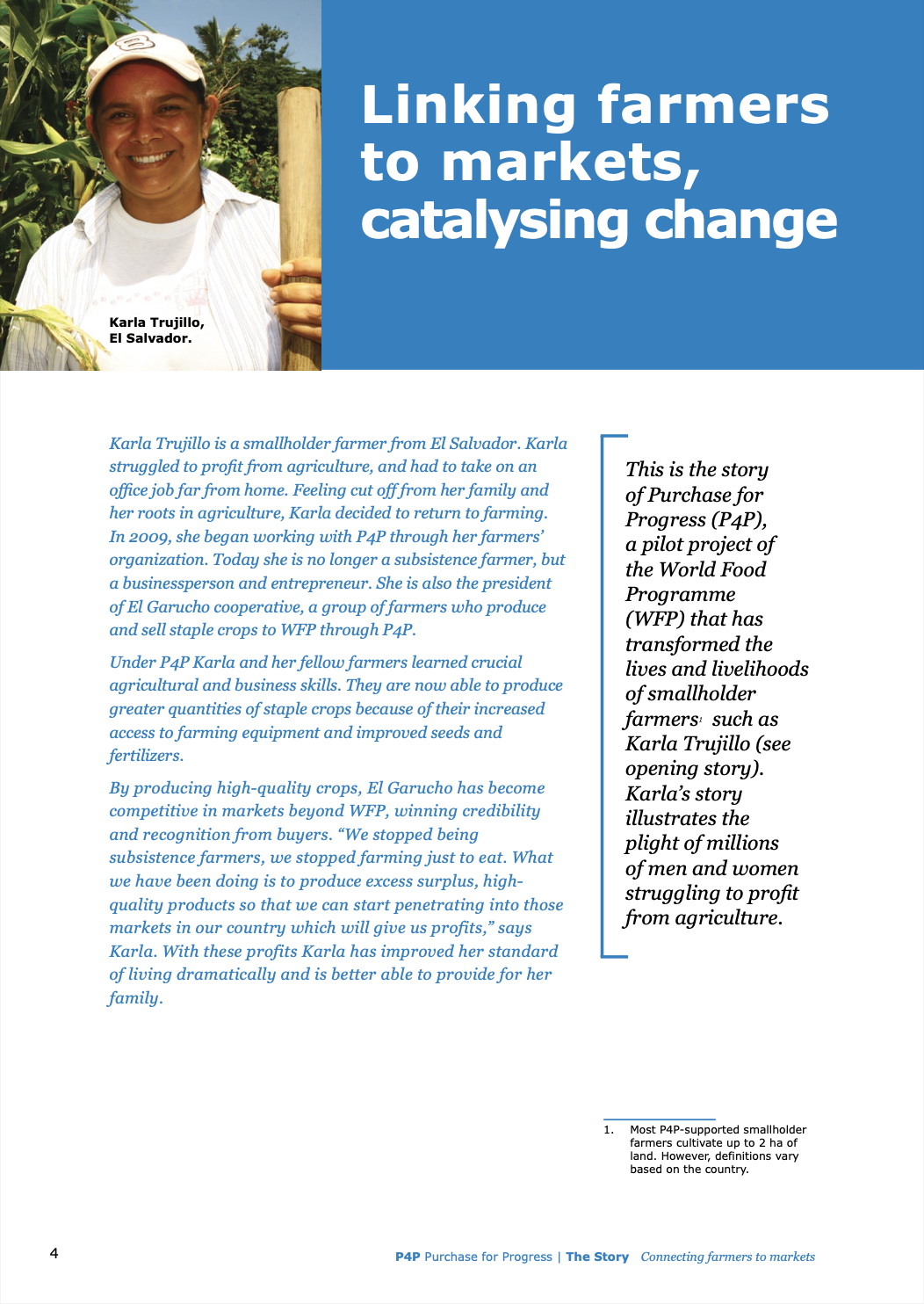
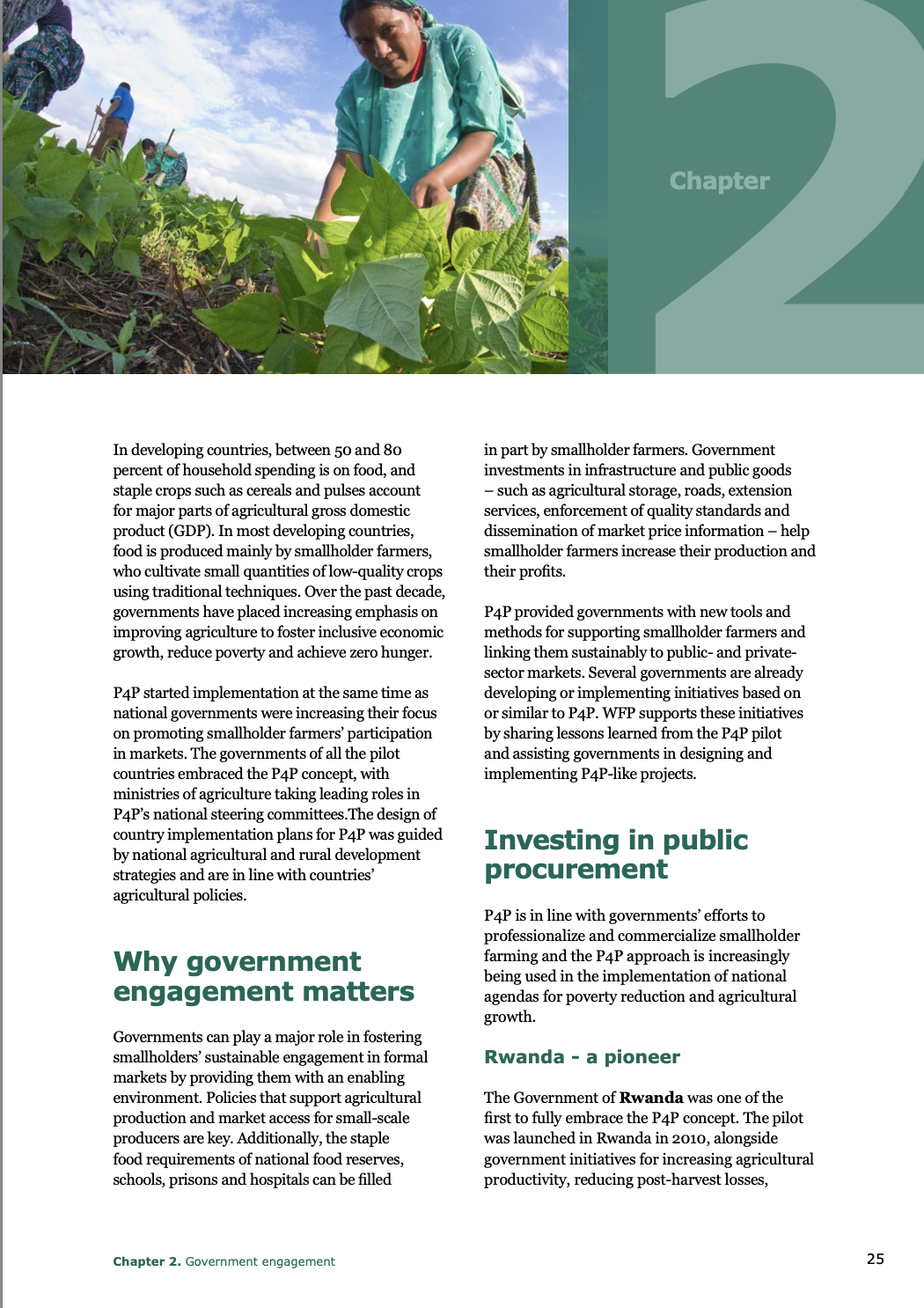
“Smallholder farmers represent the majority of people living in absolute poverty, even though they produce most of the developing world’s food. Throughout the five year pilot (2008-2013) P4P reached more than 1 million farmers in 20 diverse countries. In this book a handful of farmers tell of the profound improvements they’ve seen in their lives and livelihoods since they began participating in P4P.
P4P links WFP’s demand for staple food commodities, such as cereals and pulses, with the technical expertise of a wide range of partners. This collaboration provides smallholders with the skills and knowledge to improve their agricultural production, and an incentive to do so, as they have an assured market in which to sell their surplus crops. A variety of approaches have been used to respond to the unique opportunities and challenges in each P4P pilot country.
“We have learned that as farmers we can contribute to the eradication of hunger because that is exactly what we are doing ”